
ColoSense® offered by Labcorp*
Noninvasive CRC screening designed for completion, follow-through, and reliable detection

ColoSense is the first FDA-approved**, multi-target stool-based colorectal cancer (CRC) screening test using innovative RNA technology for reliable CRC detection in average-risk adults aged 45 and older.¹ It combines high performance in detecting CRC and advanced adenomas with a simplified at-home collection process, helping overcome barriers like colonoscopy hesitancy and complexity of other options. ColoSense is integrated into EHRs via Labcorp Link® for seamless ordering.

ColoSense uses a multi-target stool RNA (mt-sRNA) approach to detect colorectal neoplasia-associated biomarkers alongside occult hemoglobin in stool.1
RNA reflects real-time gene expression, allowing detection of biologic activity associated with CRC and advanced adenomas.2
Detection of molecular signals linked to CRC and advanced adenomas
A comprehensive biological view of disease activity
Strong performance for reliable detection
Validated in a large prospective clinical study in average-risk patients
Detection is consistent across age groups, including adults 45-49
***12/12 patients (100%, 95% confidence interval, 74%-100%)
Patients cite discomfort, including the collection process, as a top barrier for CRC screening.3 ColoSense is designed to help reduce this friction with a simplified method that eliminates the need for stool sample manipulation, helping more patients complete screening once it’s ordered.


Results are delivered to the ordering provider and made available to patients through the secure Labcorp Patient Portal.
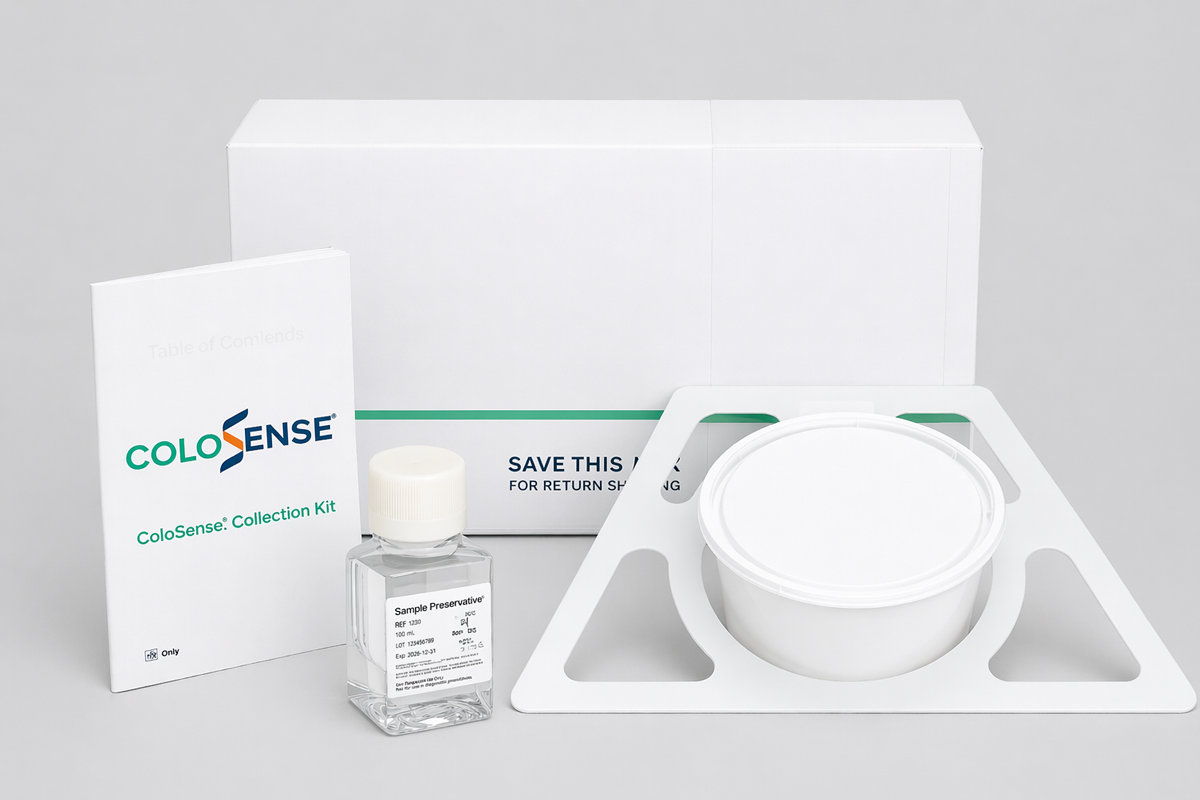
Screening doesn’t end with ordering a test; it requires follow-through. ColoSense integrates into existing practice infrastructure, enabling providers to move through the screening continuum with greater consistency.
24/7 support, education, personalized reminders for test completion and rescreening (every three years), and clear guidance on next steps for positive results, including assistance with follow-through to colonoscopy4†
Population-level visibility into CRC screening gaps
Patient-level tracking of specimen status, results, and trends
Seamless ordering and reporting
See how Labcorp can help improve CRC screening completion and support earlier detection in your practice.
*Labcorp offers ColoSense through a commercial collaboration with Geneoscopy, enabling health care customers to conveniently order through Labcorp as part of their comprehensive screening programs.
**ColoSense was granted Breakthrough Device designation. It is the only RNA-based stool test with this distinction, acknowledging its innovative approach to CRC detection.
†Provider opt-in required
ColoSense is a registered trademark of Geneoscopy.
ColoSense is an FDA-approved**, non-invasive at-home screening test for adults aged 45+ who are at average risk for colorectal cancer (CRC). Created with your experience in mind, it features a simplified collection process that helps minimize sample handling compared with other at-home stool-based tests. Recommended every three years, ColoSense offers convenient at‑home sample collection along with end‑to‑end screening support, including patient outreach.
The test supports disease detection by using RNA technology to look at biomarkers associated with colorectal cancer and advanced adenomas (precancerous lesions). These specific biomarkers are genetic signals in the body that change when cancer or precancer is present.

Colorectal cancer
Advanced adenomas (precancerous lesions) that could develop into cancer
ColoSense combines trusted science with a simpler experience designed to help you follow through.
Many people say colorectal cancer screening feels uncomfortable or complicated, especially when it involves handling a stool sample. ColoSense is designed to make this process easier. With a simpler collection method that removes the need to handle your sample directly, it helps reduce the hassle so you can complete your screening with more confidence and less stress.
Your kit is shipped directly to your home
The kit is designed for a clean, straightforward collection experience
Use the prepaid package to return your sample.
Your result is shared with your provider and available through the MyLabcorp™ app or online at MyLabcorp.com
CRC remains one of the most common, yet preventable, cancers in the U.S.6 With the recent rise in cases among adults under 50, more people are paying attention and seeking out information about screening and prevention.
CRC can be especially challenging because many people don’t experience symptoms in the early stages. This means you may feel completely healthy and still be at risk. Add in busy schedules and concerns about test preparation, and it’s easy to see why many people delay screening. But screening doesn’t have to feel overwhelming.
For average-risk adults, screening is recommended starting at age 45, even if you feel fine. Regular screening can detect cancer early, when it's most treatable, and it can also identify advanced adenomas (precancerous lesions) before they develop into cancer.
You don’t have to navigate your colorectal cancer screening options alone. Studies show you are much more likely to follow through with screening after discussing it with your healthcare provider.7 Together, you can choose the right approach for your specific needs.
Start the conversation today by asking your provider if ColoSense® offered by Labcorp is right for you. Keep in mind that if you have a personal or family history of colorectal cancer, or other specific risk factors, your provider may recommend an alternative screening method, such as a colonoscopy.
Keep in mind that if you have a personal or family history of colorectal cancer, or other specific risk factors, your provider may recommend an alternative screening method, such as a colonoscopy.
*Labcorp offers ColoSense through a commercial collaboration with Geneoscopy, enabling healthcare customers to conveniently order through Labcorp as part of their comprehensive screening programs.
**ColoSense was granted Breakthrough Device designation. It is the only RNA-based stool test with this distinction, acknowledging its innovative approach to CRC detection.
ColoSense is intended to screen adults aged 45 years or older who are at average risk for developing CRC. Do not use ColoSense if you have personal history of CRC or other related cancers, have inflammatory bowel disease or certain hereditary syndromes, received a positive result on another CRC screening method within the last six months or 12 months for fecal occult blood test or fecal immunochemical test. ColoSense is not a replacement for colonoscopy in high-risk individuals. False positives and false negatives can occur. Please see full Important Risk Information at ColoSense.com/risk-information
ColoSense is a registered trademark of Geneoscopy. ColoSense offered by Labcorp is available through a commercial collaboration with Geneoscopy allowing expanded access for patients to colorectal cancer screening solutions nationwide.